


Three Takeaways from Today's Panel on the Proposed Articles of Faith (Global Methodist Church)

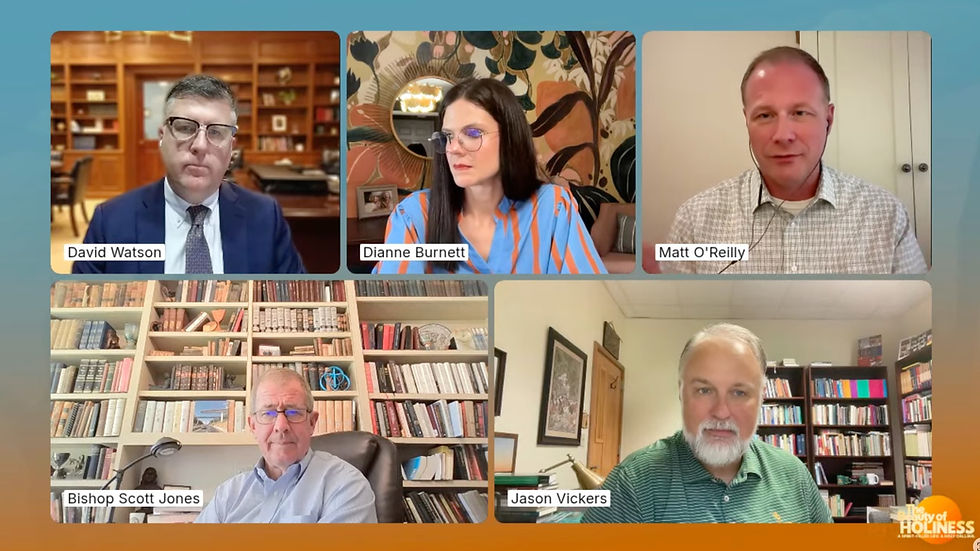
One of the most important topics of discussion in the Global Methodist Church right now is the proposed Articles of Faith that will be before the General Conference meeting in South Africa later this year. I recently had the opportunity to participate in a panel discussion about the writing and revision process for the Articles of Faith. If you haven't seen it, you should be sure to watch. We cover a number of major questions including:
Why are we considering adopting these proposed Articles of Faith?
What was the revision process and how was the feedback incorporated?
How will the Articles function in the life of the Global Methodist Church?
The other panelists were Bishop Scott Jones, David Watson, and Jason Vickers. Dianne Burnett moderated and, along with Christen Turney, did a great job putting the whole thing together and getting it out to the Church.
I came away from the discussion with a several major takeaways.
Cultivating Consensus
It's been really good to think about what it means to cultivate broad consensus with regard to doctrinal integrity. Within that, the question of how much gets defined in relation to how much intentional ambiguity we have is really important and quite challenging.
Article VIII on Holy Scripture is a good case study on this. I think most Global Methodists have a very high view of Scripture. We wouldn't be here if we didn't. Conflicting beliefs about the Bible were central to the division within the United Methodist Church, and our shared commitment to the authority of Scripture was a major motivator in our commitment to form a new denomination. Global Methodists are Bible people. In light of that, it makes sense that we have a very strong statement on Scripture in the Articles of Faith.
But authority is only one part of a full and robust doctrine of Scripture. The doctrine of Scripture classically understood would address inspiration, truthfulness, and infallibility along with authority. Sometimes you might here someone talk about these four aspects of the doctrine of Scripture as options from which to choose. Inerrancy and infallibility are sometimes framed as alternatives options.
But a thorough account of the doctrine of Scripture is both/and, not either/or. If this were a multiple choice test, the answer would be "all of the above." The Bible is authoritative and inspired and truthful and infallible.
But within each of these categories there are various understandings and approaches that might be on the table. Does that mean we've created an illusion of unity where none actually exists? No. It means we've created a basic consensus with regard to agreed upon language, while at the same time engaging in an ongoing and edifying discussion about how the details might be worked out. That's how confessions and doctrinal statements work.
A scholarly article needs to parse out and nuance as many details as possible. A confession of faith is a different thing entirely. It defines boundaries within which we can articulate various faithful expressions of the basic commitment.
Institutional Transparency
Another big takeaway for me was the high value placed on transparency regarding the process at the denominational level. With this panel, the GMC as a denominational entity, offered the whole world an opportunity to see how we got where we are, why certain decisions were made, and where it goes from here. If these Articles of Faith are adopted, they will not have been pronounced from on high by denominational insiders. The whole Church was invited to contribute feedback on drafts of the Articles, and if you read the revised version, you'll see how seriously that process was taken. The feedback was heard and acted on. With this panel, the revision process has been presented and explained. The whole thing has been an important early opportunity for the GMC in further instantiating the value of institutional tranparency. That's incredibly healthy.
Different Articles Function Differently
Another interesting aspect of this has to do with the different functions of individual articles. Some of them articulate classical Christian doctrine that align us with the whole Church throughout space and time. Think about the Article on the Trinity; there's nothing distinctively Wesleyan or Protestant about it. And rightfully so. Any Christian of any denomination or tradition could affirm it. Other articles define us as Protestants and distinguish us from Roman Catholic and Eastern Orthodox traditions. What the Articles of Faith say about grace, atonement, the Church, and the Sacraments are all in this category and are quite Protestant indeed. Still other Articles delineate our distinctive Wesleyan teachings and distinguish us from other Protestant denominations. The Article on Entire Sanctification is very much in this category. Different Articles function differently, and they work together as a whole to mark out our Wesleyan commitments within a Protestant understanding of classical Christianity.
As I've said many times in relation to this, I am so very pleased that the GMC is having an lengthy public discussion about our doctrine and theology. This is healthy and important. And I hope more people will continue to join the conversation.
I also hope you'll take the time to watch the whole panel discussion and that you find it informative and encouraging. Just click the button below to watch on YouTube.
Dr. Matt O'Reilly is Lead Pastor of Christ Church Birmingham in Alabama, Director of Research at Wesley Biblical Seminary, and a Senior Fellow of the Center for Pastor Theologians. A two-time recipeint of the Stott Award for Pastoral Engagement, he is author of Free to Be Holy and Paul and the Resurrected Body.

This page contains affiliate links to products. We may receive a commission for purchases made through these links.


Comments